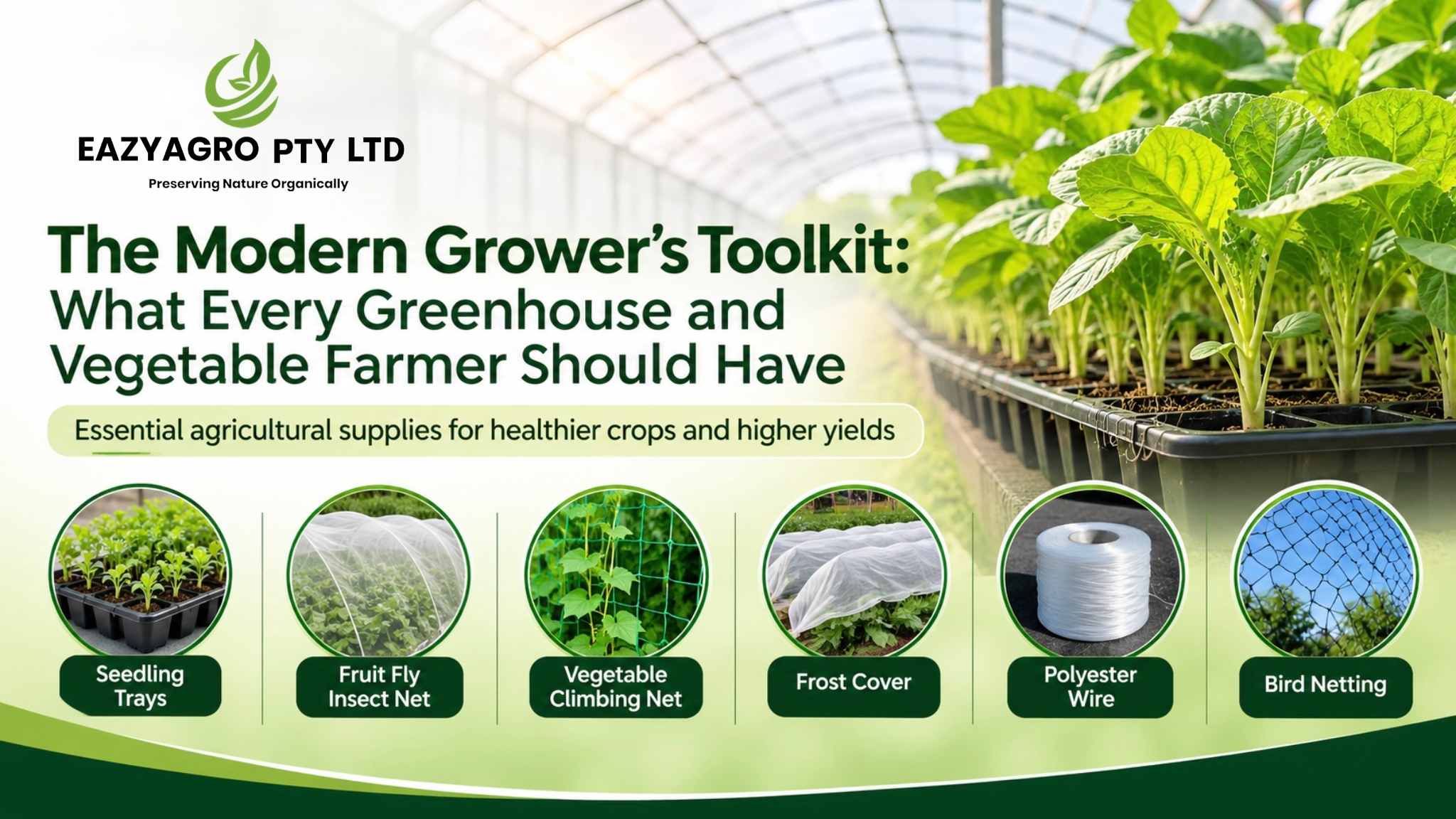
The Modern Grower's Toolkit: Insect Netting, Seedling Trays, Trellis Support and Bird Netting for Every Greenhouse and Vegetable Farmer
A practical, educational guide to essential agricultural supplies and how to use them
A productive greenhouse or vegetable farm runs on a handful of dependable tools. Insect netting keeps pests out, seedling trays start young plants evenly, trellis support lifts climbing crops off the ground, and bird netting guards fruit until harvest. Add garden netting, a frost cover and strong polyester wire, and you have a toolkit that protects your yield from sowing to picking. If you plan to buy netting or other supplies this season, this guide explains what each item does, how to choose it and how to use it well, along with where eazyAgro products fit in.
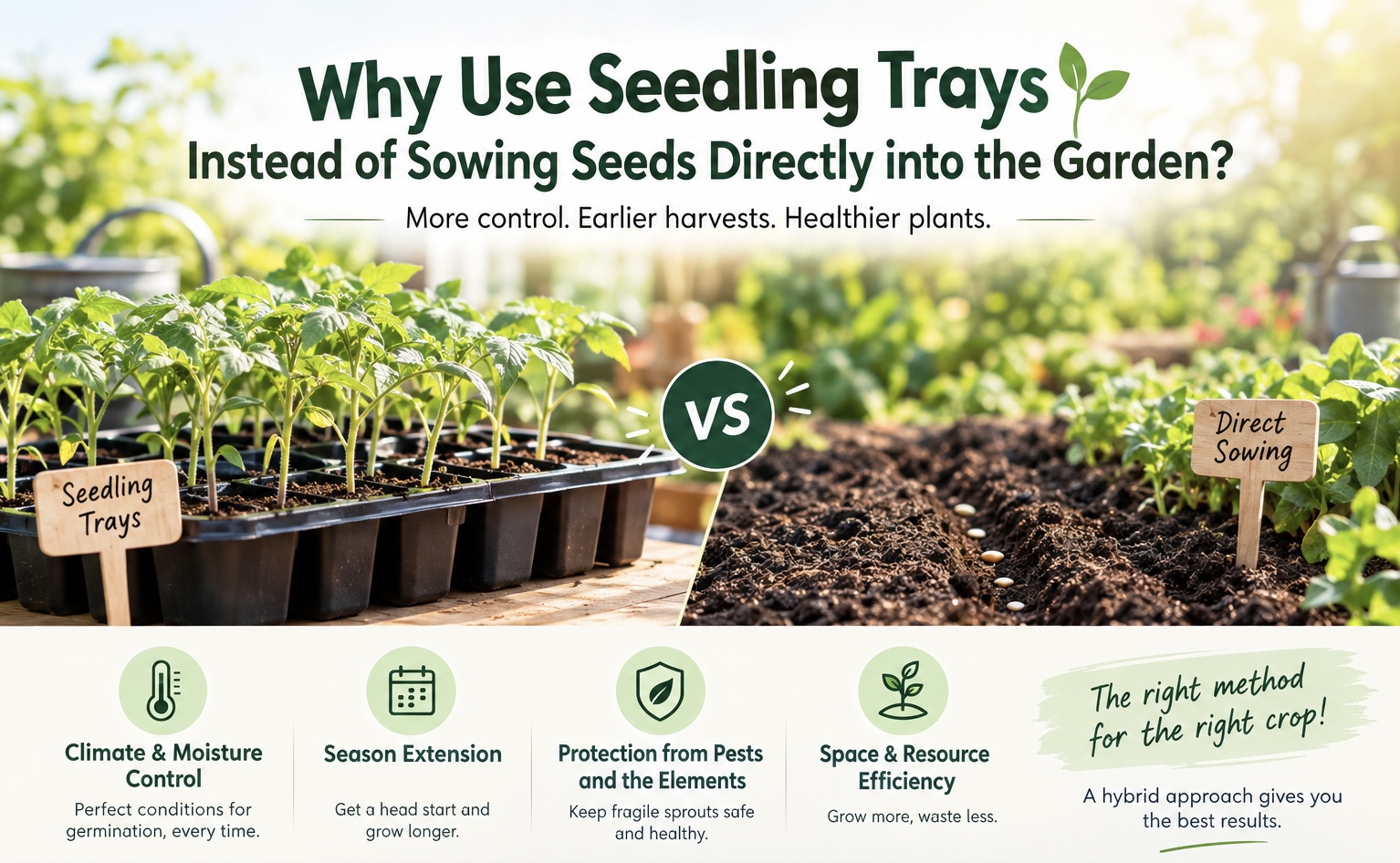
Seedling Trays: Where a Strong Harvest Begins
Every crop is only as good as its start. Seedling trays give each seed its own cell, so roots grow without competition and transplanting causes less shock. Well-designed seedling trays also make it easier to water, label and move hundreds of plants through a greenhouse at once. eazyAgro seedling trays are built for exactly this kind of repeated nursery work, and reusable seedling trays lower your cost per plant over several seasons.
Propagation Tray or Standard Tray?
A propagation tray is usually paired with a clear dome or heat mat, which makes it ideal for seeds that need steady warmth and humidity to germinate. Once seedlings are established, a standard tray gives better airflow and lowers the risk of damping-off. Many growers keep both: a propagation tray for the first ten days, then seedling trays for hardening off. If you are starting from scratch, a single propagation tray plus a few extra seedling trays is a sensible first set.
Choosing Cell Count: The 128 Cell Seedling Tray
Cell count decides how much root room each plant gets. A 128 cell seedling tray suits small-seeded crops such as lettuce, cabbage and herbs because it packs many plants into little bench space. Larger crops like tomatoes, cucumbers and squash need fewer, bigger cells, so match the 128 cell seedling tray to the crop rather than using it for everything. Wash and sanitise every tray between batches, whichever size you choose.
Insect Netting: Your First Line of Defence
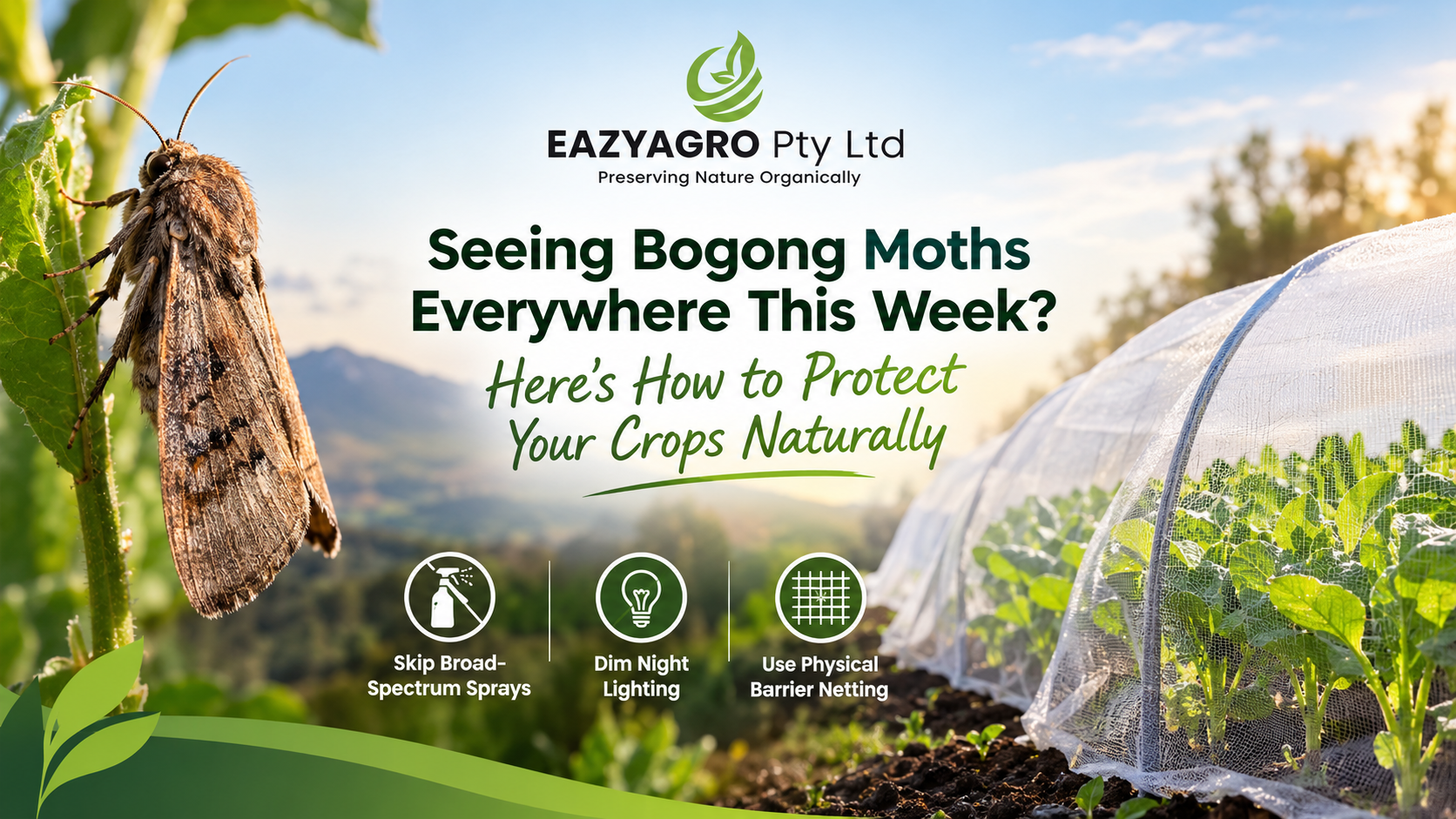
Insect netting is a fine mesh fabric that physically blocks pests from reaching your crop, with no spray needed. Because it works as a barrier rather than a chemical, it suits both conventional and organic production. In research on the spotted wing drosophila, a damaging fruit pest, laboratory tests found that a maximum aperture of 1.0 mm was needed to exclude it [1]. Field demonstrations in Germany used nets with meshes of roughly 0.8 to 1.3 mm and reported an overall reduction in fruit infestation, along with lower insecticide use where regular monitoring and harvest sanitation were also carried out [2].
Net for Plants: What Mesh Size Really Means
If you are wondering what a net for plants actually does, the answer depends on the mesh. Finer mesh excludes smaller insects but also restricts airflow and can raise temperatures, so ventilation matters in greenhouses and tunnels. A net for plants should be matched to the pest you face: tight mesh for tiny flies and thrips, slightly larger mesh for moths and beetles. Exclusion also has limits. If a pest gets inside the system it can establish quickly, and researchers advise regular monitoring because beneficial insects are excluded as well [2]. Insect netting works best as one part of an integrated approach, not a replacement for scouting.
The eazyAgro Fruit Fly Insect Net
The eazyAgro Fruit Fly Insect Net is designed for berries, stone fruit, tomatoes and other crops that fruit flies target. Install it over a frame, seal the edges to the ground and check seams often, since flies exploit small gaps. Pair it with good harvest sanitation by removing fallen or overripe fruit. For frame ideas, University of Vermont Extension publishes a practical factsheet on supports for exclusion netting [3]. Ready to buy netting for your greenhouse or orchard? Start with the mesh size your target pest requires, then confirm the roll width and UV rating of the insect netting before you order.
Garden Netting for Vegetables: Choosing the Right Garden Net
Garden netting covers a wide range of jobs, from keeping cabbage white butterflies off brassicas to shading tender crops and supporting vines. The simplest way to choose a garden net is to start with the problem. For pests, pick fine mesh. For climbing crops, pick strong, open mesh. For birds, pick bird-safe mesh. Garden netting with a UV treatment will last several seasons, while untreated material can become brittle in a single summer.
Many growers also search for plant netting, and the term covers the same family of products, so check mesh size, weight, UV treatment and roll width before you decide. Good plant netting should feel strong but flexible, and it should not fray when cut.
Garden Nets for Plants: Matching Net to Crop
Garden nets for plants come in light and heavy grades. Lightweight garden nets for plants protect seedlings and leafy greens, while heavier weaves carry the weight of cucumbers, beans and peas. A garden net for plants that will stay outdoors should be UV-stabilised so it lasts for years instead of one season. When you pick a garden net for plants, measure your bed width first, then add extra for overlap, fixing and anchoring.
Trellis Support for Climbing Plants
Trellis support turns a sprawling vine into an upright, productive plant. Climbing crops such as cucumbers, beans, peas and tomatoes grow better when they have a structure to climb: fruit stays cleaner, air moves through the canopy and picking is faster. Good trellis support for climbing plants also reduces disease, because leaves dry faster and fruit stays off damp soil.
Plant Support and Climbing Plant Support Basics
Plant support does not have to be complicated. The key is matching the structure to the plant's growth habit. Twining crops like beans need a vertical surface to wind around, while tendril climbers like peas and cucumbers need a thin, open surface to grab. Climbing plant support should also be strong enough for a full crop load, since wet, fruit-laden vines weigh far more than most growers expect. Whichever plant support you choose, set posts firmly and tension the structure before planting.
Garden Climber Support, Garden Support Trellis and Plant Support Trellis
Garden climber support can be as simple as bamboo canes and twine, or as durable as a permanent frame. A garden support trellis is a good fit for fixed beds and greenhouses where you replant the same row each year. A plant support trellis made from netting is lighter and cheaper, and it can be rolled up and stored after harvest. For large vegetable plots, trellis support in the form of a net hung from a top wire is usually the fastest to install and the easiest to replace.
The eazyAgro Vegetable Climbing Net
The eazyAgro Vegetable Climbing Net is an open-mesh net for cucumbers, beans, peas and other climbers. Stretch it between two posts or from an overhead wire, fix it at the top and bottom so it stays taut, and guide young shoots onto it by hand during the first weeks. It works as climbing plant support in open fields and in tunnels alike, and it doubles as a simple garden climber support in home-scale beds.
Polyester Wire: The Quiet Workhorse of Plant Support
Polyester wire is the strong line that holds trellis support together. Growers use it for horizontal and overhead runs in tomato, cucumber and fruit crops because it is durable and resists stretching and rot. eazyAgro Polyester Wire gives you a dependable option for tensioning nets, building a plant support trellis or running overhead lines for plant support in greenhouses. A good rule is to use polyester wire for the structural lines and softer twine for tying plants in, so the main frame never sags under a heavy crop. For garden climber support on a smaller scale, a few strands of polyester wire between sturdy posts are often all you need, and the same wire can anchor a garden support trellis against wind.
Frost Cover: Insurance for the Shoulder Seasons
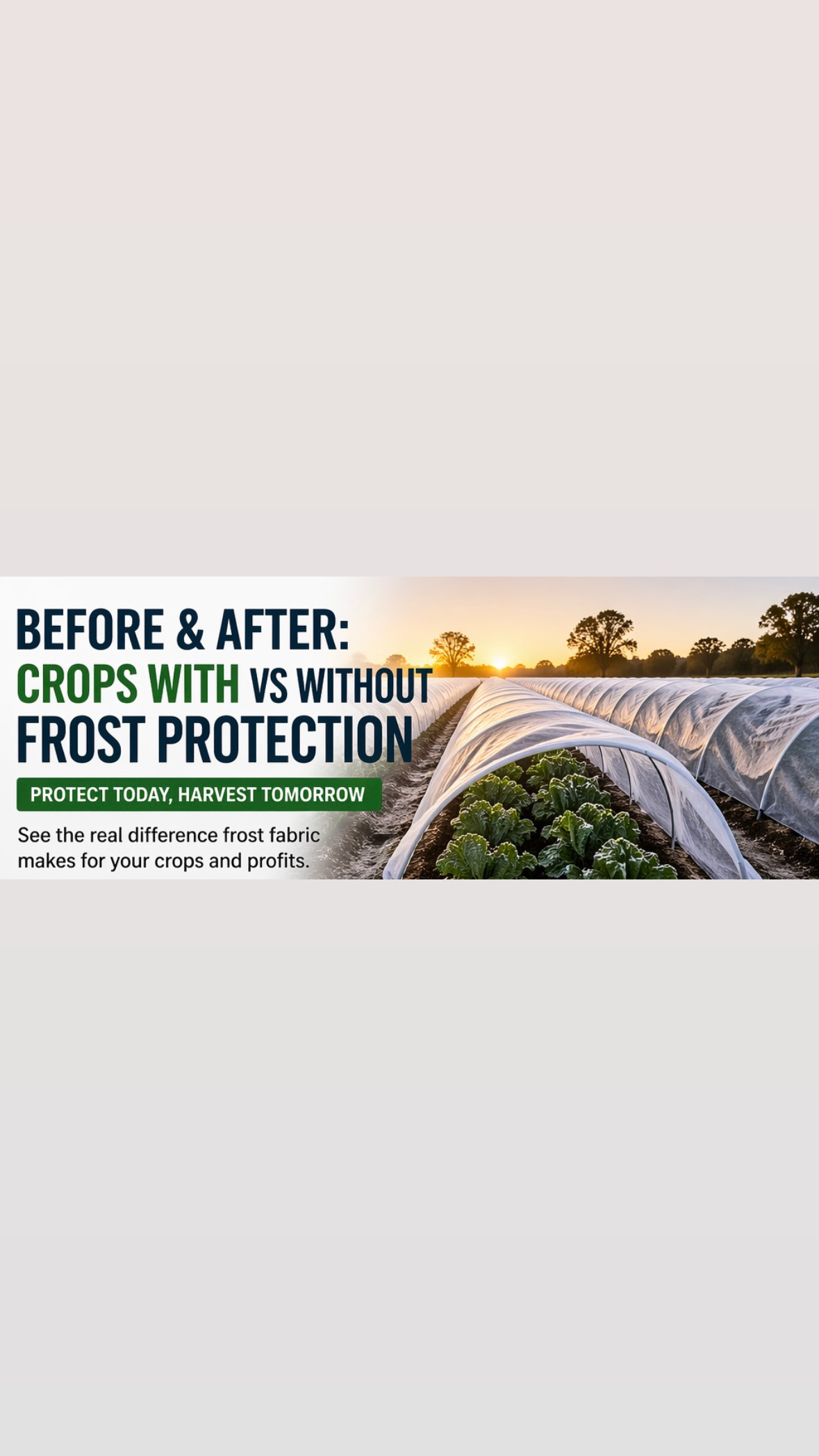
A frost cover is a lightweight fabric laid over or held above crops to trap heat and slow the loss of warmth from the soil at night. Radiation frosts at the start and end of the growing season are usually only a few degrees below critical levels, which makes protection worthwhile [4]. Extension guidance says row covers can deliver roughly 2 to 7°F of frost protection depending on the material, and that heavier fabrics protect more but let through less light [5]. Heavier frost blankets can provide around 8 degrees of protection [6].
Use the eazyAgro Frost Cover over hoops or directly on crops on cold nights. Anchor the edges so wind cannot lift it, and remove or vent it on warm days to prevent overheating. Choose the fabric weight according to your coldest expected night and the crop's tolerance, not just the price.
Bird Netting: Protecting Fruit Without Harming Wildlife
Bird netting is one of the most useful and most misused tools on a farm. Used well, it protects ripening fruit from flocks of birds. Used badly, it traps and injures wildlife. Knowing how to install bird netting correctly is as important as choosing the right product, and the difference comes down to mesh size, visibility and tension.
Netting for Fruit Trees: Mesh, Colour and Fitting
Netting for fruit trees should be fixed tightly over a frame rather than draped loosely over branches. NSW Government guidance recommends netting with an aperture no greater than 5 x 5 mm at full stretch to avoid wildlife entanglement [7], and Agriculture Victoria requires the same 5 mm limit for household fruit netting, fixed tightly so birds and rodents cannot reach the fruit [8]. Those rules are written for household growers in Australia, but the principle is sound for growers anywhere. White netting is easier for animals to see than dark netting, and thin monofilament nets should be avoided or, if used, stretched tight over a frame [9].
Wildlife Friendly Bird Netting and the eazyAgro Bird Net
Wildlife friendly bird netting has small openings, is easy to see and is installed under tension. Wildlife groups offer a simple test: if you can poke a finger through the holes, the net is a hazard [10]. The eazyAgro Bird Net is a practical bird net for fruit trees, vines and berry rows. Confirm the mesh size on the product page against the guidance above, fit it over a frame, and check it regularly so that any trapped animal can be released quickly [9]. If you buy netting for birds, choose wildlife friendly bird netting over cheaper, wide-mesh alternatives.
How to Buy Netting the Smart Way
Before you buy netting, answer four questions: what are you protecting, from what, for how long, and on what structure? Insect netting, garden netting and bird netting differ in mesh size, weight and UV rating, so a single roll rarely does every job. When you buy netting, compare roll width, mesh size, UV stabilisation and expected life rather than price alone.
Buy a Net That Fits the Job
If you want to buy a net for a tunnel, measure the length, width and height, then add extra for overlap and burying the edges. Buy a net slightly wider than you need, because trimming is easy and stretching is not. For climbing crops, buy a net for plants with the right mesh opening and strength, and pair it with polyester wire for the top and side lines. For a large order, ask the supplier about bulk pricing and delivery before you place a net buy.
Net Buy Checklist
Every net buy should start with a short list:
• The pest or bird you need to exclude, and the mesh size that stops it
• Roll size, fixing method and the frame or wire it will hang from
• UV rating and expected life
• Whether you need a garden net for plants, heavier plant netting, or a trellis net
• Whether a garden support trellis or other plant support is also needed
A net buy planned in the off-season gives you time to compare options and install before pressure peaks.
Conclusion
The modern grower's toolkit is simple: seedling trays to start strong, insect netting and garden netting to protect crops, trellis support and polyester wire to hold plants up, a frost cover for cold nights, and bird netting for the final stretch before harvest. Choose each item for the job, install it carefully and review it every season. Browse the eazyAgro range to buy netting, trays and supports that work together, and plan your next net buy around the checklist above.
References
1. Chouinard, G., Pelletier, F., Larose, M., Knoch, S., Pouchet, C., Dumont, M.-J., & Tavares, J. R. (2023). Insect netting: Effect of mesh size and shape on exclusion of some fruit pests and natural enemies under laboratory and orchard conditions. Journal of Pest Science, 96(2), 857–869. https://doi.org/10.1007/s10340-022-01582-5
2. Julius Kühn-Institut (coordinator). Demonstration project "Exclusion netting for managing Spotted Wing Drosophila in fruit crops": Results 2017–2019. OpenAgrar. https://www.openagrar.de/receive/openagrar_mods_00062865
3. University of Vermont Extension. Frames to Support Exclusion Netting over Blueberries to Prevent Spotted Wing Drosophila Damage (factsheet). https://www.uvm.edu/sites/default/files/UVM-Extension-Cultivating-Healthy-Communities/horticulture/SWD/SWDNettingFrameFactsheet.pdf
4. Colorado State University Extension. Frost Protection and Extending the Growing Season. https://extension.colostate.edu/resource/frost-protection-and-extending-the-growing-season/
5. New Mexico State University Cooperative Extension Service. Row Cover Vegetable Production Techniques, Guide H-251. https://pubs.nmsu.edu/%5Fh/H251.pdf
6. North Dakota State University Extension. Extend Your Growing Season. https://www.ag.ndsu.edu/yardandgardenreport/documents/extend-your-growing-season
7. NSW Government, Environment and Heritage. Flying foxes and netting. https://www.environment.nsw.gov.au/topics/animals-and-plants/wildlife-management/management-flying-foxes/flying-foxes-and-netting
8. Agriculture Victoria. Use of fruit netting: harvest without harm. https://agriculture.vic.gov.au/livestock-and-animals/animal-welfare-victoria/pocta-act-1986/protecting-fruit-trees-and-wildlife
9. NSW Department of Primary Industries (2022). SOP3: Exclusion of pest birds using netting. https://dpi.nsw.gov.au/__data/assets/pdf_file/0007/1396744/NSWBIR-SOP3-Exclusion-of-pest-birds-using-netting.PDF
10. Wildlife Victoria. Wildlife safe netting. https://wildlifevictoria.org.au/learn/fact-sheets/wildlife-safe-netting
References
- 1Chouinard, G., Pelletier, F., Larose, M., Knoch, S., Pouchet, C., Dumont, M.-J., & Tavares, J. R.. Chouinard, G., Pelletier, F., Larose, M., Knoch, S.,. Chouinard, G., Pelletier, F., Larose, M., Knoch, S., Pouchet, C., Dumont, M.-J., & Tavares, J. R. (2023). Insect netting: Effect of mesh size and shap (2023)doi.org
- 2Frames to Support Exclusion Netting over Blueberries to Prevent Spotted Wing Drosophila Damage (factsheet).. University of Vermont Extensionuvm.edu
- 3Julius Kühn-Institut. Exclusion netting for managing Spotted Wing Drosophila in fruit crops (2017-2019)openagrar.de
- 4Frost Protection and Extending the Growing Season.. Colorado State University Extension.extension.colostate.edu
- 5Row Cover Vegetable Production Techniques, Guide H-251.. New Mexico State University Cooperative Extension Service.pubs.nmsu.edu
- 6Extend Your Growing Season.. North Dakota State University Extension.ag.ndsu.edu
- 7Flying foxes and netting.. NSW Government, Environment and Heritageenvironment.nsw.gov.au
- 8Use of fruit netting: harvest without harm.. Agriculture Victoria.agriculture.vic.gov.au
- 9SOP3: Exclusion of pest birds using netting.. NSW Department of Primary Industries (2022)dpi.nsw.gov.au
- 10Wildlife safe netting. Wildlife Victoriawildlifevictoria.org.au