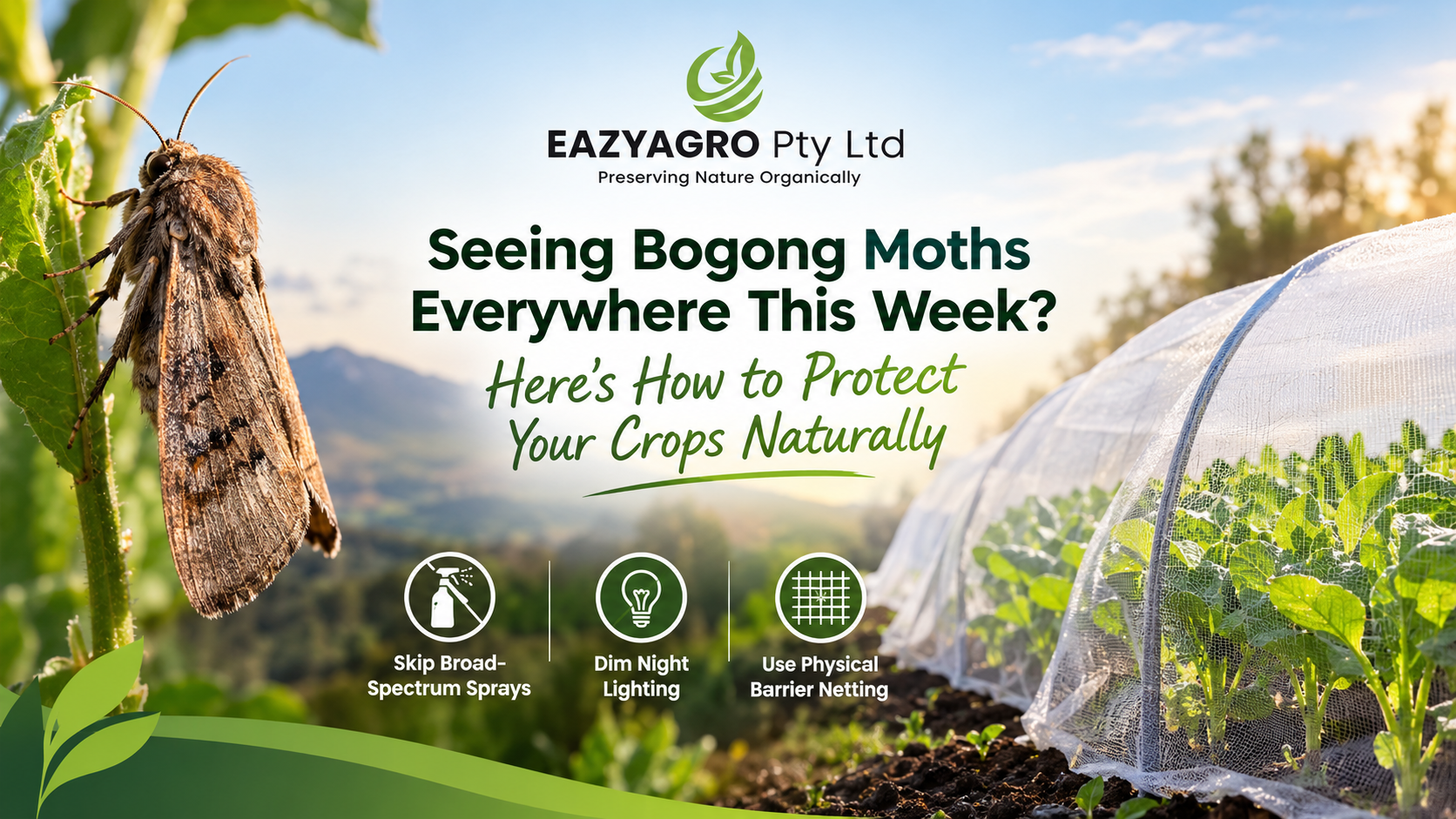
Insect Netting for Bogong Moth Season: Stop Losing Seedlings Overnight
You plant a neat row of seedlings on Monday. By Thursday, half of it is gone, cut off at ground level, and there is nothing in sight. For many Australian growers, this is the real cost of Bogong moth country. The swarms in spring get the headlines, but the caterpillars that follow in autumn and winter do the damage. This guide explains the problems growers face and how insect netting solves them without harming an endangered native species.
Why Growers Need Insect Netting Every Bogong Moth Season
Bogong moths are back in large numbers across south-eastern Australia. 7NEWS reported sightings around six times higher than in previous seasons. For growers, that brings real worries, not just curiosity.
- Seedlings that disappear overnight. Cutworms feed at night and hide in the soil by day. You see the loss before you see the cause.
- Resowing and replanting costs. Every lost seedling means extra seed, extra labour and a delayed harvest.
- Not knowing when the risk is real. The spring swarm looks alarming, but the crop risk comes months later.
- Pressure not to spray. The Bogong moth is listed as endangered, and councils and researchers have asked people not to kill or spray the moths.
- Spray side effects. Broad-spectrum insecticides also hit bees, parasitic wasps and other beneficial insects that keep cutworms down.
- Worry that netting causes new problems. Heat, poor airflow, aphids and pollination are fair concerns.
The good news is that netting for insects answers most of these problems, if it goes on at the right time.
Do Bogong Moths Damage Crops?
The adult moths seen in spring do not eat crops. They are migrating to the Australian Alps, where they rest through summer on stored fat. The crop risk comes from the caterpillar stage. Bogong moth caterpillars are a type of cutworm. They feed on young broadleaf seedlings during autumn and winter in inland growing areas, so that is the period to plan protection for.
When Do Bogong Moth Caterpillars Feed?
The Bogong moth (Agrotis infusa) has a yearly cycle that links inland farmland to the high country.
- Spring: Adults fly south and south-east to the Alps. This is the swarm seen in towns and cities now.
- Summer: The moths shelter in cool alpine caves and rock crevices.
- Autumn: The moths fly back to the inland plains, mate and lay eggs.
- Winter: Caterpillars hatch and feed on broadleaf seedlings, according to the Australian Museum.
The moths flying now will not feed on your beds. The next generation is the one to plan for, from autumn onwards.
Which Crops Are Most at Risk?
Bogong moth caterpillars prefer broadleaf plants, and young plants are most vulnerable. Business Queensland lists the seedling and early growth stages as the highest-risk period for crops attacked by cutworms.
Recorded host crops include:
- Brassicas such as cabbage and cauliflower
- Silver beet
- Peas and potatoes
- Lucerne and linseed
- Wheat and other cereals, especially when sown in early autumn
According to HerbiGuide, two or three large caterpillars per square metre can seriously damage a young crop. In many years, natural fungi and parasitic wasps keep numbers below that level, which is another reason to avoid broad-spectrum sprays.
How to Spot Cutworm Damage Early
Cutworms feed in the late afternoon and at night, so damage usually appears before the caterpillars are seen.
- Small holes or skeletonised leaves on young plants
- Seedlings cut off at or just above ground level
- Patchy rows where plants have disappeared overnight
To confirm the cause, gently scratch away the top few centimetres of soil around a damaged plant. Cutworms are usually found curled in a “C” shape near the stem.
Planning winter beds? EazyAgro netting comes in 2m-Wide
and 3.1m-Wide options.
How Insect Netting Protects Crops from Bogong Moth Caterpillars
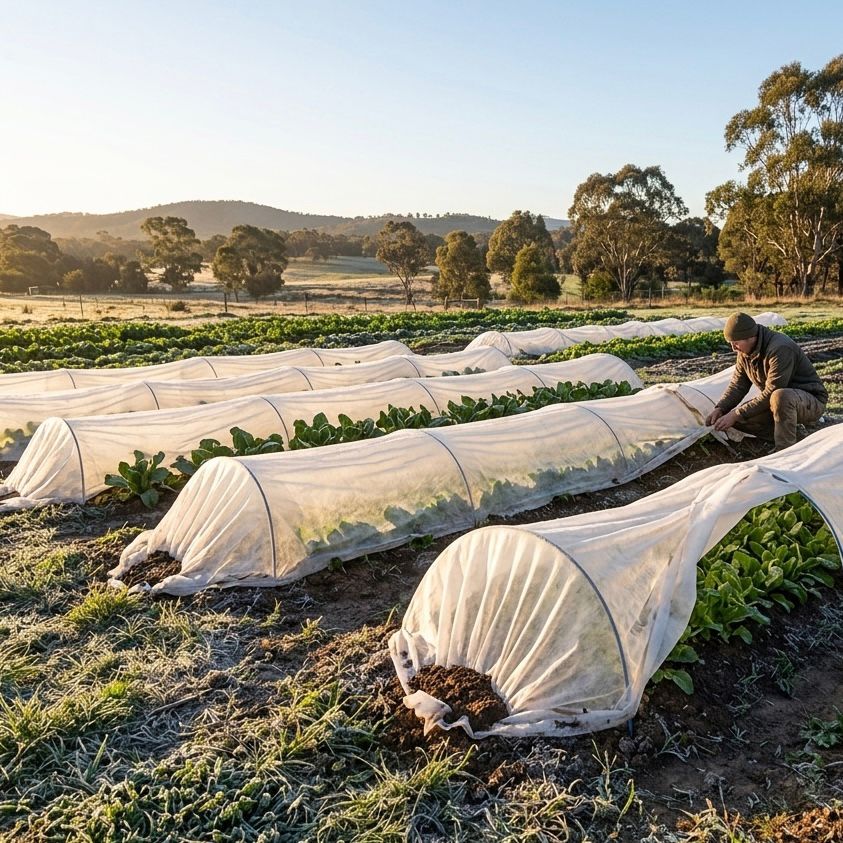
Insect netting works as a barrier between egg-laying moths and your plants. When it goes on in early autumn, before the moths return to lay eggs, it keeps adults away from the soil and seedlings under the cover. Fewer eggs under the net means fewer caterpillars at the seedling stage, fewer replants and less pressure to reach for the spray.
A few steps make the barrier work better:
- Control weeds before planting. Business Queensland recommends doing this three to four weeks before sowing.
- Check the soil before covering. Netting cannot remove caterpillars already in the bed.
- Seal the edges. Bury or weigh down the sides so moths cannot crawl underneath.
- Add collars to transplants. A ring cut from a drink bottle, pushed about 5cm into the soil, protects each stem.
- Reduce night lighting. Switch off lights that are not needed, and point essential lights away from beds.
Choosing Vege Garden Netting Without Trapping Heat or Pests
Good vege garden netting balances protection with airflow and light. Many Australian growers use mesh with openings of about 2mm or smaller to keep moths and butterflies out. Very fine mesh can trap heat and favour aphids and thrips, so ventilation matters.
For raised beds and small patches, a hoop frame with vege garden netting draped over it is simple to set up and easy to lift for harvesting. For larger areas, a crop tunnel covered in wider netting reduces the number of joins. Lift or open the cover when flowering crops need pollinators.
Can a Fruit Net Double as Insect Netting?
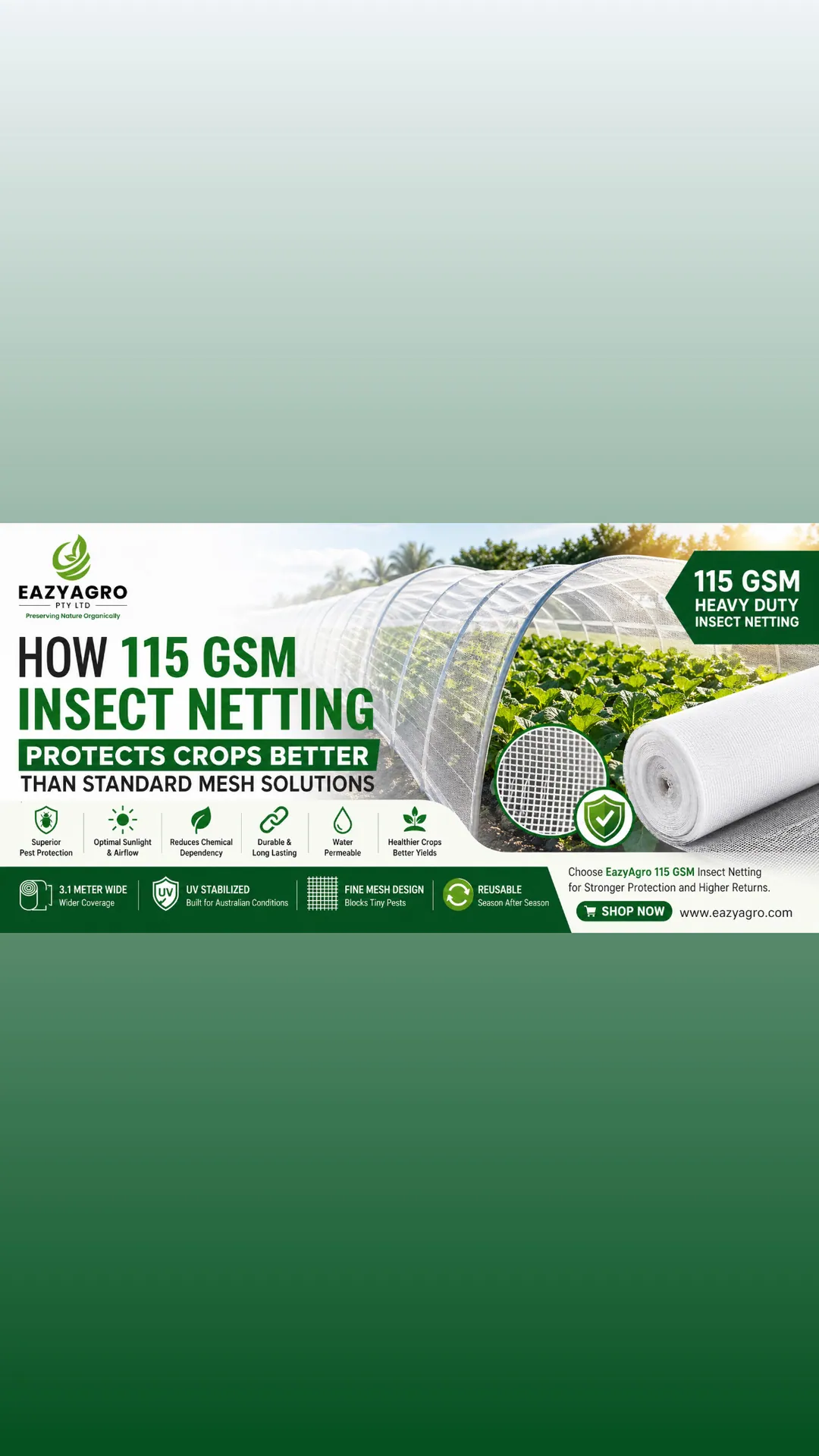
Many products sold as a fruit net are fine enough to keep moths out too. EazyAgro’s Fruit Fly & Insect Netting is designed for both jobs. It is a 115 GSM fine mesh made from UV-stabilised HDPE, with about 20–30% shade.
- 2m wide: suits raised beds, home vegetable patches, seedling areas and small crop tunnels.
- 3.1m wide: suits wider beds, crop tunnels, nursery areas and commercial plantings, with fewer joins.
Using the same roll over fruit trees in summer and vegetable beds in winter makes one purchase useful all year.
What Netting for Insects Can and Cannot Do
Netting for insects is a barrier against adult insects. It does not treat caterpillars already in the soil, and it is not needed for the migrating spring moths, which do not feed on crops. Its value is in the autumn and winter risk period, when it stops moths laying eggs on covered seedlings. Used with weed control, collars and regular night checks, it reduces the need for chemical sprays.
Common Questions About Bogong Moths and Crop Netting
Do Bogong moths eat vegetables?
Adult Bogong moths do not eat vegetables. Their caterpillars are cutworms that can feed on vegetable seedlings, especially brassicas, silver beet, peas and potatoes. This mostly happens in autumn and winter in inland areas.
Will netting stop cutworms?
Netting can stop adult moths from laying eggs on covered beds when it is installed early and sealed at the edges. It will not remove caterpillars already in the soil.
What is the difference between a fruit net and an insect net?
A fruit net is often designed to keep out fruit fly, birds and larger pests, while an insect net uses a finer mesh for small insects. Some products, including EazyAgro’s, use a fine mesh that does both jobs.
Are Bogong moths endangered?
Yes. The Bogong moth was listed as endangered on the IUCN Red List in 2021. The moths are an important food source for alpine wildlife, including the endangered Mountain Pygmy-possum.
Protect Your Crops and the Moths This Season
Growers can welcome the swarms and still protect their harvest. Plan for the caterpillar stage in autumn and winter, keep weeds down, and cover seedlings with netting before the moths return.
Shop 3.1m-Wide EazyAgro Netting
Grow better. Grow Eazy.
Sources and References
[1] Business Queensland — Cutworm
[2] Australian Museum — Bogong Moth
https://australian.museum/learn/animals/insects/bogong-moth/
[3] HerbiGuide — Bogong Moth
https://www.herbiguide.com.au/Descriptions/hg_Bogong_Moth.htm
[4] The Seed Collection — Cutworm: How to Protect Your Vulnerable Seedlings
https://theseedcollection.com.au/blog/cutworm-how-to-protect-your-vulnerable-seedlings
[5] Starts at 60 — Bogong Moths Are Back in Their Millions (October 2026)
[6] SBS News — Bogong Moth Migration 2026
https://www.sbs.com.au/news/article/bogong-moth-migration-australia-2026/p6jdonqa6