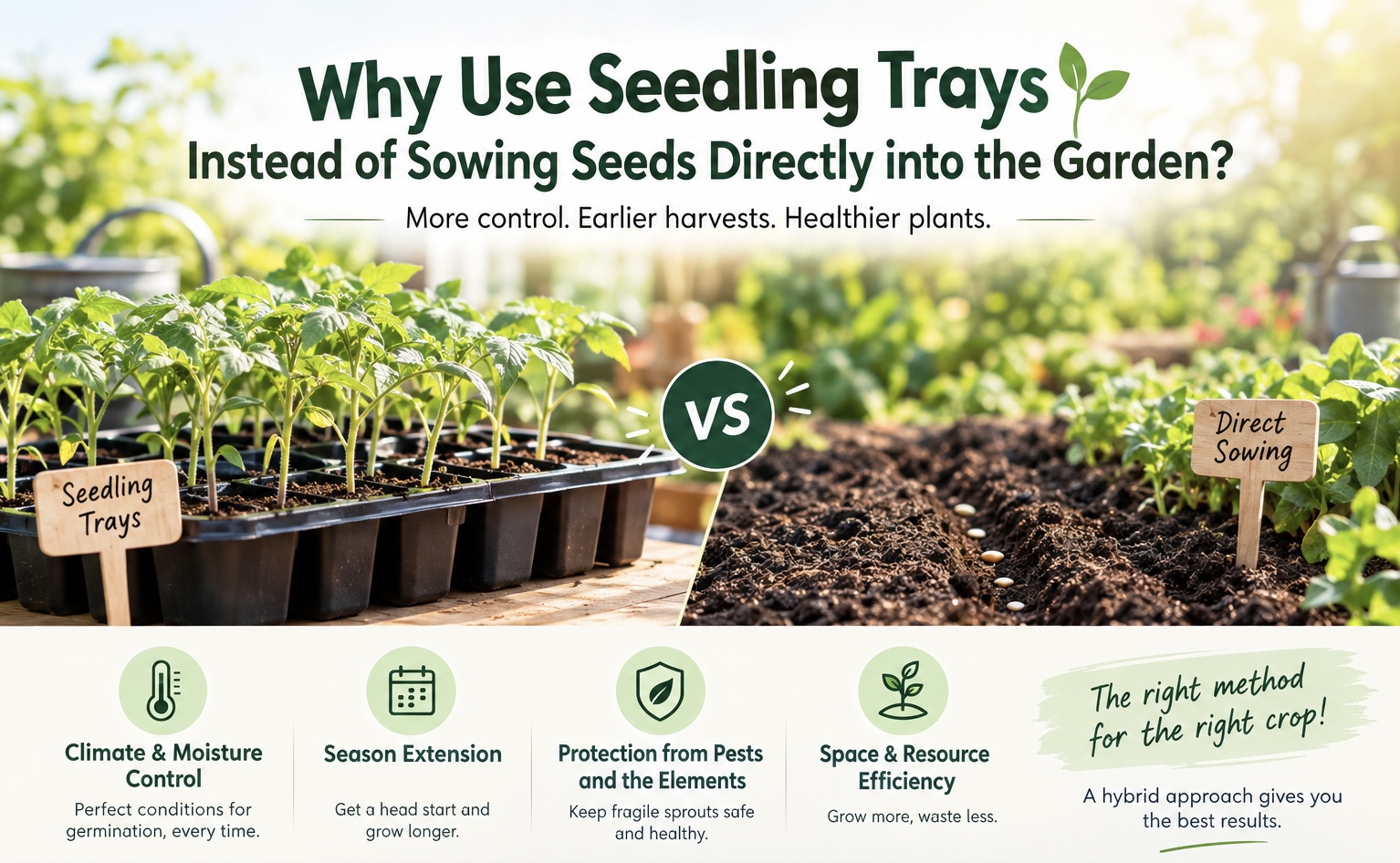
Gardeners, commercial growers and nurseries are faced with an important decision, every spring: should you start your seeds indoors using seedling trays, or sow them directly into the garden beds? While planting seeds straight into the soil seems like the most natural approach, using seedling trays has to offer way more advantages for crops.
If you want to improve the layout of your garden, boost your harvest, and stop losing seeds to the elements, consider beginning seeds in trays.
4 Benefits of Using Seedling Trays
1. Total Climate and Moisture Control:
When you plant outside, your seeds are at risk of unpredictable spring weather. A sudden cold snap can terminate germination, and a dry spell can kill a sprouting seed. Seedling trays allow you to create a perfectly controlled microclimate. You can easily manage the temperature, light, and moisture levels, ensuring optimal germination conditions that simply aren't possible outdoors. Furthermore, using sterile, soil-less seed starting mixes in trays prevents weed competition and protects fragile sprouts from soil-borne fungal diseases, such as "damping-off".
2. Significant Season Extension:
Perhaps the biggest advantage of seedling trays is the ability to get a massive head start on the growing season. By starting seeds indoors, you can begin growing plants four to twelve weeks before your area's last frost date. In regions with shorter growing seasons, this head start is absolutely critical for heat-loving crops with long maturity times—like tomatoes, peppers, and eggplants. Without the indoor head start, these plants might not have enough time to produce fruit before the first fall frost hits.
3. Protection from Pests and the Elements:
Direct-sown seeds and newly emerged sprouts are highly vulnerable. A heavy spring rainstorm can easily wash tiny seeds away. Furthermore, hungry birds, mice, and snails consider tender, newly sprouted greens to be an all-you-can-eat buffet. By keeping your seedlings indoors during their most fragile stage, you give them a fighting chance. When you finally move them to the garden, they will be robust plants capable of withstanding minor pest damage.
4. Space and Resource Efficiency:
Instead of watering and weeding a massive garden bed just to wait for tiny seeds to sprout, trays allow you to consolidate your resources. You can start dozens of plants in a single, compact tray. When planting time comes, you only transplant the strongest, healthiest seedlings into your garden beds. This ensures perfect spacing and means you never waste valuable garden real estate on seeds that failed to germinate.
When Direct Sowing is Actually Better
While seedling propagation trays are best way to germinate seeds, direct sowing is sometimes the better—or only—option for specific crops.
- Root Crops: Vegetables like carrots, radishes, and beets should always be grown from seed directly in the garden. Their sensitive taproots are easily damaged or stunted when transplanted.
- Delicate Roots and Fast Growers: Crops like squash, zucchini, cucumbers, and beans grow very fast and generally prefer direct sowing because they have sensitive roots that dislike being disturbed. However, if you must start them indoors to beat a short season, use biodegradable peat pots so you can plant the entire pot without touching the root ball.
Seedling Trays vs. Direct Sowing Comparison
Feature
Best For:
Seedling Trays (Indoors)
Tomatoes, peppers, eggplant, brassicas
Direct Sowing (Outdoors)
Carrots, radishes, beans, squash, peas
Germination Rate:
Seedling Trays (Indoors)
High (due to controlled environment)
Direct Sowing (Outdoors)
Variable (dependent on weather and soil)
Harvest Time:
Seedling Trays (Indoors)
Earlier (season extension)
Direct Sowing (Outdoors)
Later (must wait for soil to warm)
Labor & Setup:
Seedling Trays (Indoors)
Higher (requires trays, lights, daily care)
Direct Sowing (Outdoors)
Lower (plant directly and let nature help)
Pest Vulnerability:
Seedling Trays (Indoors)
Low (protected indoors during fragile stage)
Direct Sowing (Outdoors)
High (vulnerable to birds, slugs, rodents)
The Verdict
For most gardeners, a hybrid approach is the secret to success. Invest in seedling trays for your high-value, long-season crops like tomatoes and peppers, and save your direct-sowing efforts for fast-growing root vegetables and legumes.
Eazyagro 128 cells and 200 cells seedling trays are best in Australia for germination and growth of young plants before transplanting. Ideal for bulk production Explore both options:
- https://www.eazyagro.com/products/seedling-trays-128-cells-fd586863
- https://www.eazyagro.com/products/seedling-trays-200-cells-745a8fbe
Sources & citation:
1. University of California Master Gardeners of Placer County
Indoor Starts vs. Direct Sown
2. University of California Master Gardeners of Alameda County
Seeds vs starts? A practical guide for planting your spring vegetable
3. Utah State University (USU) Extension
Starting Vegetable Seeds Indoors: Germination
4. Purdue University Extension
Starting Seeds Indoors (HO-14-W)
References
- 1Indoor Starts vs. Direct Sown. University of California Master Gardeners of Placer Countyucanr.edu
- 2Seeds vs starts? A practical guide for planting your spring vegetable. University of California Master Gardeners of Alameda Countyucanr.edu
- 3Starting Vegetable Seeds Indoors: Germination. Utah State University (USU) Extensionextension.usu.edu
- 4B. Rosie Lerner. Starting Seeds Indoors (HO-14-W). Purdue University Extensionextension.purdue.edu