
Which Seeds Should Be Started in Seedling Trays?
Starting seeds in seedling trays is one of the most efficient ways to achieve better germination, healthier seedlings, and higher transplant success rates. Whether you’re a commercial grower, nursery operator, or home gardener, seedling trays provide a controlled environment that helps young plants establish strong roots before transplanting.
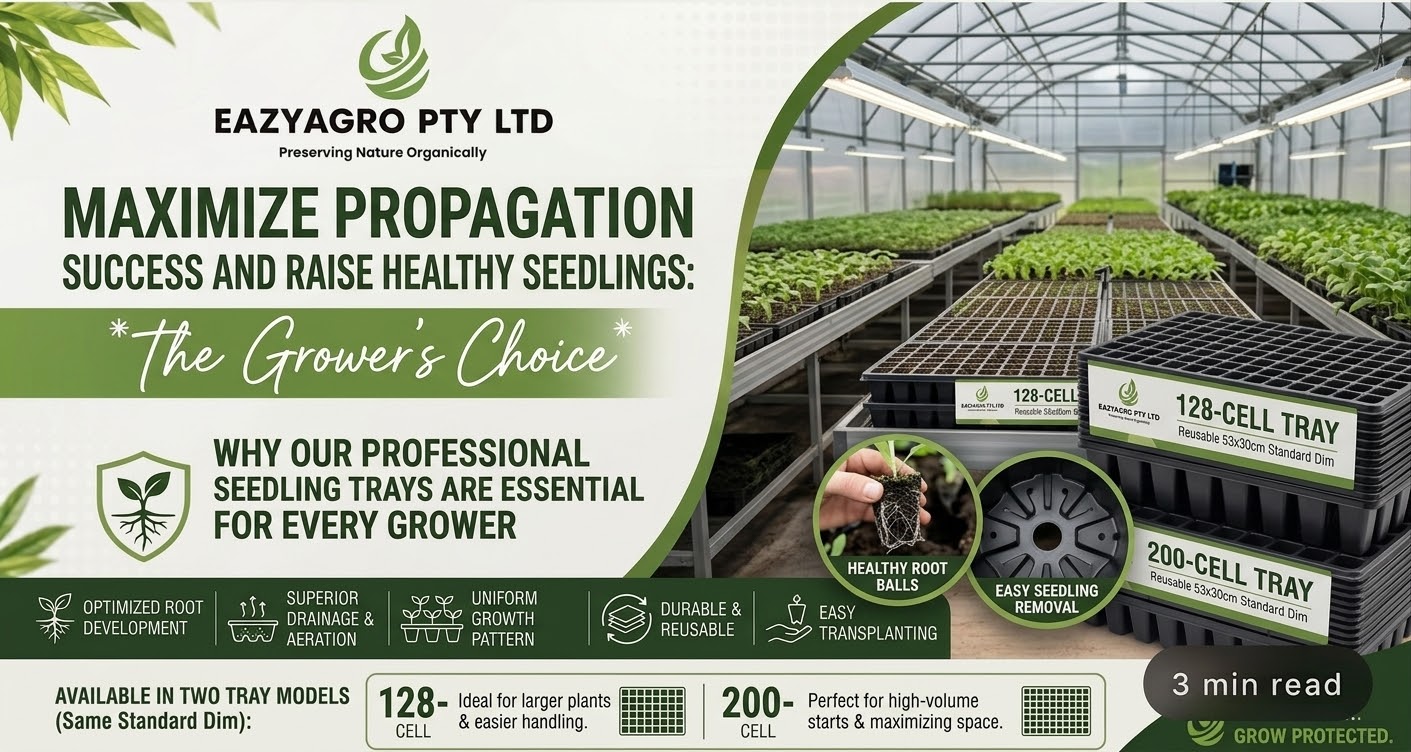
EazyAgro offers durable Polystyrene (PS) Seedling Trays in both 128-cell and 200-cell configurations, making it easy to choose the right tray based on crop type and growing requirements.
Choosing Between 128-Cell and 200-Cell Seedling Trays
128-Cell Seedling Trays
The larger cell size provides more root space, making these trays ideal for crops that spend a longer period in the nursery.
Best suited for:
- Tomatoes
- Bell Peppers
- Chili Peppers
- Eggplants
- Cucumbers
- Melons
- Watermelons
200-Cell Seedling Trays
With a higher cell count and smaller cell size, these trays are perfect for crops that are transplanted at an early stage.
Best suited for:
- Lettuce
- Cabbage
- Cauliflower
- Broccoli
- Pak Choi
- Kale
- Herbs
- Flower seedlings
Best Vegetable Seeds to Start in Seedling Trays
Brassica Crops
Brassicas are among the most commonly propagated in seedling trays.
Examples include:
- Cabbage
- Cauliflower
- Broccoli
- Brussels Sprouts
- Kale
These crops benefit from early protection and develop uniform seedlings that are easy to transplant.
Solanaceous Crops
Many warm-season vegetables are typically started in trays before being moved to the field.
Examples include:
- Tomato
- Chili Pepper
- Bell Pepper
- Eggplant
The controlled environment of a nursery tray promotes strong root development and healthier transplants.
Leafy Greens
Leafy vegetables germinate quickly and perform exceptionally well in seedling trays.
Suitable crops:
- Lettuce
- Spinach
- Pak Choi
- Swiss Chard
- Mustard Greens
Herbs
Seedling trays allow growers to produce large quantities of herbs in a small space.
Popular choices:
- Basil
- Coriander (Cilantro)
- Parsley
- Dill
- Oregano
- Thyme
Flower Seeds
Commercial nurseries often use seedling trays for flower propagation.
Common examples:
- Marigold
- Petunia
- Zinnia
- Celosia
- Dianthus
- Salvia
Seeds Better Suited for Direct Sowing
Some crops do not transplant well and are generally best sown directly into the field or garden.
These include:
- Carrots
- Radishes
- Turnips
- Beetroot
- Peas
- Beans
Because these crops develop sensitive taproots, direct sowing often produces better results.
Why Choose EazyAgro Seedling Trays?
EazyAgro’s 128-cell and 200-cell seedling trays are designed to support efficient seed propagation and healthy plant development.
Key Benefits
- Durable Polystyrene (PS) construction
- Uniform cell design for consistent seedling growth
- Improved root development
- Easy handling and transplanting
- Suitable for vegetables, herbs, flowers, and nursery crops
- Ideal for commercial growers and home gardeners
Whether you’re growing tomatoes and peppers in a 128-cell tray or producing large quantities of cabbage, lettuce, and herbs in a 200-cell tray, EazyAgro Seedling Trays provide a reliable solution for successful seedling production.
Final Thoughts
The right seedling tray can make a significant difference in plant health and transplant success. Crops such as tomatoes, peppers, cabbage, broccoli, lettuce, herbs, and flowers all benefit from being started in seedling trays. By selecting the appropriate tray size—128 cells for larger seedlings or 200 cells for high-density propagation—growers can maximize efficiency and produce strong, healthy plants ready for the field.