Vertical Gardening: Growing More Vegetables in Less Space with Vegetable Climbing Net
If you’re looking to maximize vegetable production without expanding your growing area, vertical gardening is one of the smartest solutions available. By training plants to grow upward instead of spreading across the ground, gardeners and commercial growers can make better use of limited space while improving plant health and harvest quality.
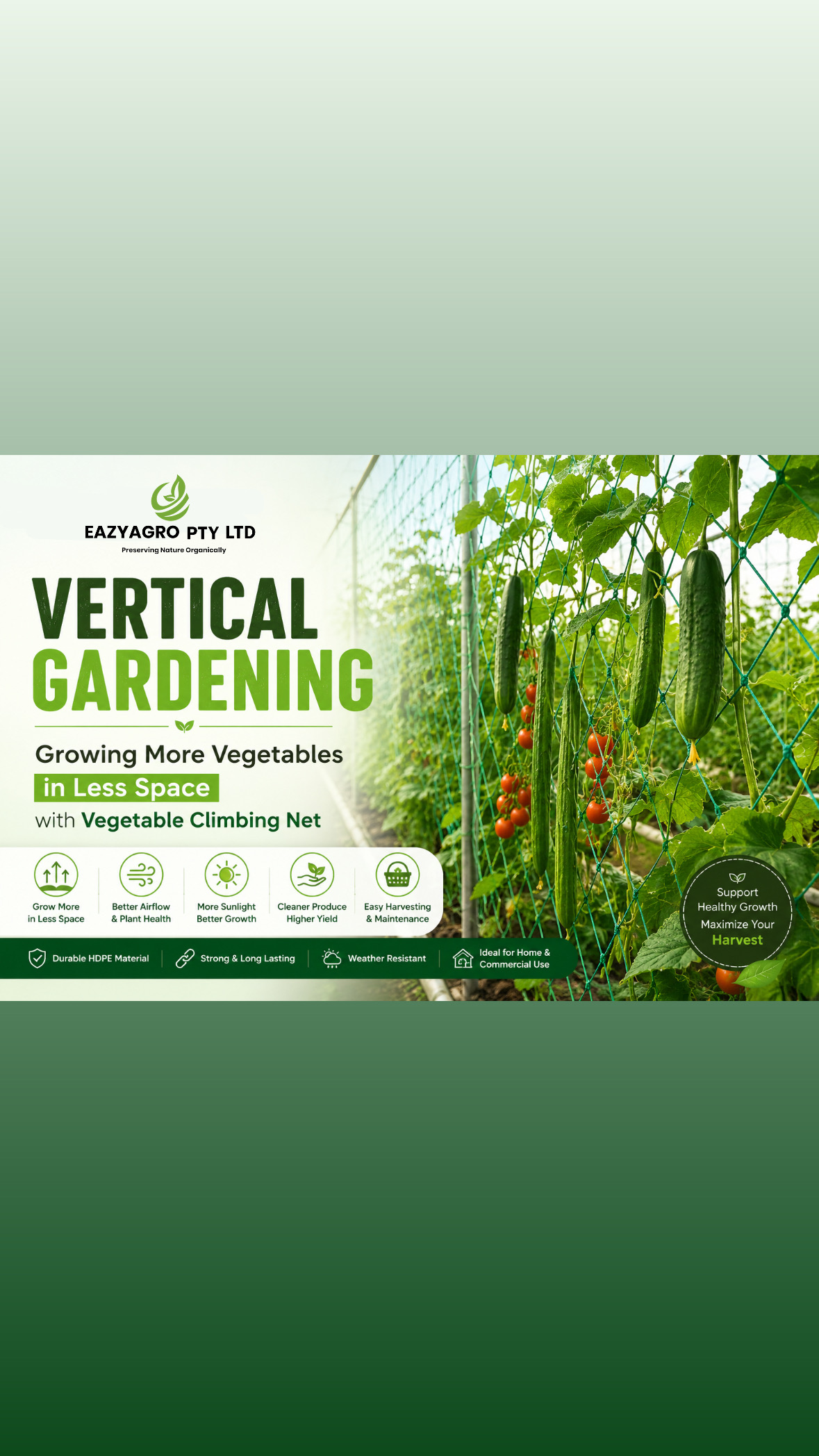
A simple and effective way to create a vertical growing system is by using a Vegetable Climbing Net, which provides strong support for climbing and vining crops such as cucumbers, beans, peas, bitter gourd, tomatoes, and other vegetables. Climbing nets help keep plants upright, organized, and easier to manage throughout the growing season. (Aqua Gardening Australia)
Why Choose Vertical Gardening?
1. Grow More in Less Space
Vertical gardening allows plants to utilize vertical space instead of occupying valuable ground area. This makes it ideal for small gardens, greenhouses, tunnels, and commercial farms where every square meter counts.
2. Improve Airflow and Plant Health
When plants are lifted off the ground and properly spaced, air can circulate more freely around the foliage. Better airflow helps reduce excess moisture and creates a healthier growing environment. (Aqua Gardening Australia)
3. Better Sunlight Exposure
Vegetables growing on a climbing net receive more even sunlight, encouraging stronger growth and improved crop development. The open structure also helps prevent overcrowding.
4. Cleaner Produce
Keeping fruits and vegetables off the soil reduces contact with dirt and moisture, resulting in cleaner harvests and easier post-harvest handling. (Aqua Gardening Australia)
5. Easier Harvesting and Maintenance
Vertical systems make pruning, monitoring, and harvesting much simpler. Growers can quickly identify ripe produce and access plants without damaging surrounding crops. (Aqua Gardening Australia)
How a Vegetable Climbing Net Helps
The EazyAgro Vegetable Climbing Net is manufactured from durable HDPE material and features a diamond-shaped mesh design that provides reliable support for climbing vegetables throughout the growing season. HDPE netting is lightweight, strong, weather-resistant, and suitable for both home gardens and commercial growing operations. (EazyAgro)
The net can be installed vertically between poles, frames, or greenhouse structures, allowing plants to naturally climb as they grow. This support system helps prevent stem damage while promoting healthy upward growth.
Best Crops for Climbing Nets
A vegetable climbing net is ideal for:
- Cucumbers
- Pole beans
- Peas
- Bitter gourd
- Snake gourd
- Tomatoes
- Ridge gourd
- Other climbing and vining vegetables
These crops naturally benefit from vertical support, resulting in improved growth and easier harvesting. (Aqua Gardening Australia)
Installation Tips
- Secure the net firmly between strong support poles.
- Keep the net tensioned for maximum stability.
- Guide young plants toward the mesh during early growth.
- Regularly tie or train vigorous vines if required.
- Ensure adequate spacing between rows for airflow and access.
Final Thoughts
Vertical gardening is an efficient and practical way to increase vegetable production while maintaining a cleaner and healthier growing environment. With the support of a durable Vegetable Climbing Net, growers can improve plant management, maximize growing space, and enjoy higher-quality harvests throughout the season.
Whether you’re managing a backyard garden, greenhouse, or commercial vegetable operation, a vegetable climbing net is a simple investment that can make a significant difference in crop performance and productivity.